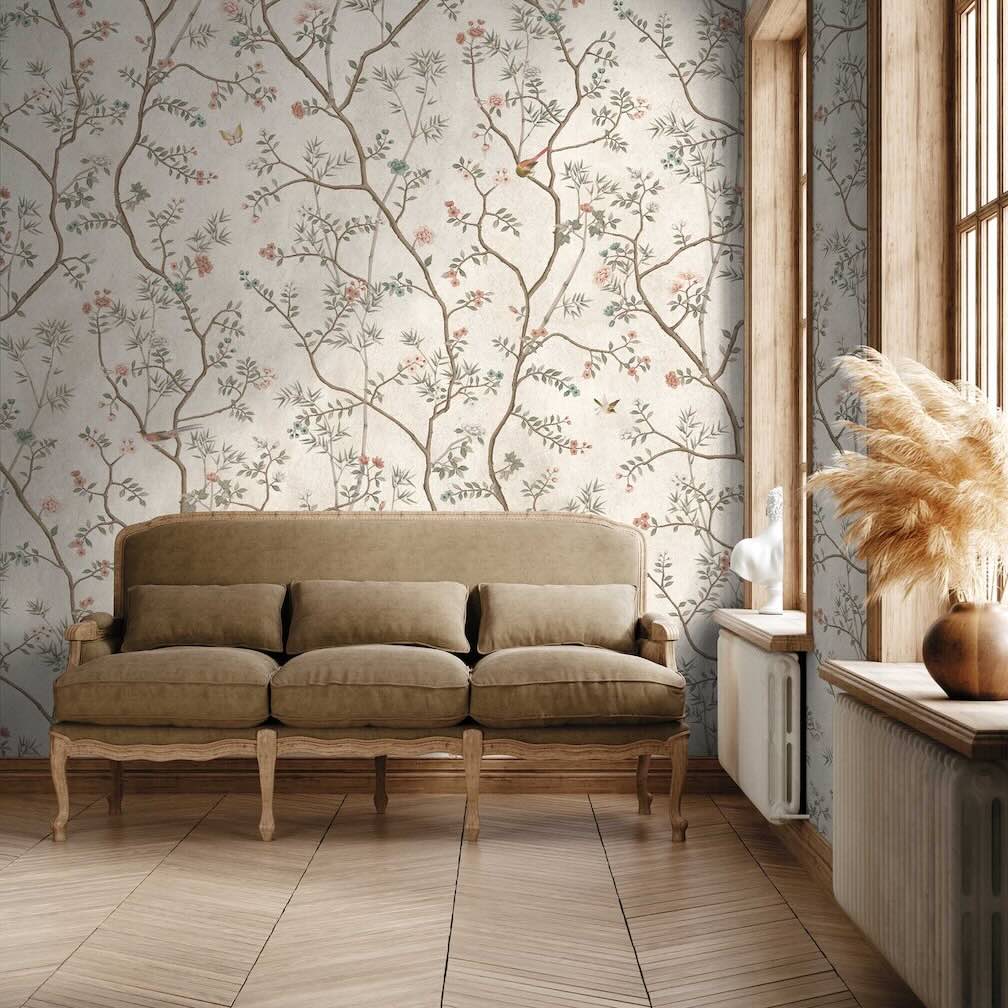

There’s something undeniably exciting about walking into a room that feels both fresh and timeless at the same time. That sweet spot—where sleek contemporary lines meet the soulful charm of vintage patterns—is exactly what happens when you mix modern and classic wallpaper well. Done right, the result isn’t a clash; it’s a conversation. Done wrong, it can feel like your living room is having an identity crisis. Luckily, with a few thoughtful strategies, anyone can pull off this layered, collected look without hiring an expensive designer.
Why Mix the Two Styles in the First Place?
The trick lies in treating wallpaper less like a blanket statement and more like deliberate brushstrokes on a canvas. Classic wallpaper (think damasks, toile, florals with history, or subtle stripes) brings warmth, texture, and a sense of “this home has stories.” Modern wallpaper leans into bold geometrics, oversized botanicals, metallic accents, or quiet textural grasscloths that feel undeniably now. When you pair the two thoughtfully, you get depth and personality that plain paint just can’t deliver.
Rule of Thumb: Let One Style Lead
Start with proportion and placement. One of the easiest ways to keep things balanced is the 70/30 rule (or even 80/20 if you’re feeling cautious. Let one style dominate the space while the other plays a supporting role. For example, cover three walls in a serene modern linen-look paper in soft greige, then surprise everyone with one dramatic accent wall in a rich, traditional Chinoiserie or William Morris pattern. The classic wallpaper becomes the jewelry of the room—striking, but not overwhelming.
Unite Them with Color (The Tone-on-Tone Trick)
Another approach that almost never fails is sticking to a shared color palette. A moody indigo modern geometric pairs beautifully with an antique-style floral pulled from the exact same blue family of blues. The patterns suddenly read as intentional cousins rather than strangers forced to share a room. Your mid-century sofa and your grandmother’s velvet armchair stop arguing and start chatting over coffee.
Think Beyond the Walls: Ceilings, Niches, and Furniture
Wallpaper doesn’t have to stop at chair-rail height. Try papering the ceiling in a subtle modern metallic dot or stripe while keeping the walls wrapped in heritage florals. Or flip it—classic patterns on the walls, bold modern graphic paper on the ceiling—for a look that feels like chic nostalgia with a wink. Don’t forget inside bookcases, closet interiors, or the backs of open shelving; these small hits of pattern add surprise without chaos.
Texture Is Your Secret Weapon
A glossy, high-shine modern foil wallpaper reflects light and feels current, while a matte, slightly raised classic flock brings cozy depth. Place them side-by-side and the contrast becomes sophisticated rather than jarring. Natural grasscloth, linen, or silk-look modern papers also soften bolder classic prints and keep the room from feeling too “costume-y.”
Use Furniture and Accessories as the Glue
If your walls are doing a stylish tug-of-war between old and new, anchor everything with pieces that speak both languages. A clean-lined modern sofa upholstered in a nubby vintage-inspired fabric, a Lucite coffee table with brass details, or an antique rug with faded colors against crisp white trim—these bridge items whisper, “Yes, all of this belongs together.”
Give Your Eyes a Break with Negative Space
Sometimes the most impactful mix happens when you leave parts of the wall bare or painted in a crisp neutral. A single feature wall in dramatic classic wallpaper, flanked by calm modern shiplap or smooth plaster, lets the pattern sing without drowning the room. It’s like giving your eyes a place to rest between chapters.
Lighting Makes or Breaks the Blend
Classic patterns often look best under warm, layered lighting—think sconces, table lamps, or a chandelier with soft bulbs. Modern papers, especially those with metallic threads or high contrast, pop under cooler, directed light like track lighting or picture lights. Use both kinds of fixtures in the same room and you reinforce the intentional blend of eras.
Final Step: Trust Your Gut and Edit Ruthlessly
Lay out samples on the floor, tape huge swatches to the wall, and live with them for a week. Step back, squint, take phone photos—whatever helps you see the big picture. If something feels like it’s shouting when everything else is whispering, it probably doesn’t belong. The goal isn’t to showcase how many patterns you can cram in; it’s to create a space that feels effortlessly curated, like it evolved over time (even if you pulled it together in a single weekend).
Mixing modern and classic wallpaper is less about following rigid rules and more about telling your own story with confidence. When you get the balance right, the result isn’t just a pretty room—it’s a space with soul, surprise, and serious staying power. And in a world full of fast trends, that kind of timeless-yet-current magic is worth every minute you spend agonizing over samples.