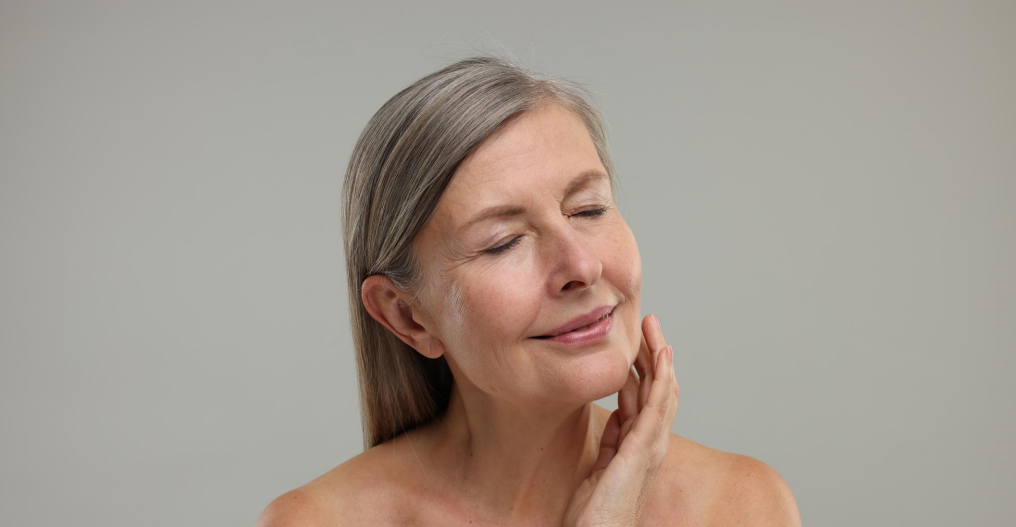

Where previous decades focused on anti-ageing as damage control, concealment, and the desperate attempt to look younger, contemporary skincare increasingly embraces a different philosophy: genuine skin health restoration that produces visible results without requiring you to look like you’ve had work done. At the heart of this shift sits a new generation of treatments that work with the skin’s natural biology rather than simply masking signs of ageing, and nowhere is this more evident than in the treatments gaining traction among those who want genuine improvement rather than temporary fixes.
Mature skin faces specific challenges that younger skin doesn’t encounter. Collagen production declines from approximately age 25 at a rate of around 1% annually, gradually reducing the structural scaffold that keeps skin firm and smooth.
Most conventional treatments address these issues symptomatically: retinoids accelerate cell turnover, hyaluronic acid fillers replace lost volume, and Botox relaxes muscles, causing dynamic wrinkles. These approaches work for their intended purposes but don’t fundamentally restore the skin’s own regenerative capacity. The newer wave of treatments targets this deeper level, stimulating the skin to regenerate rather than simply supplementing what it’s lost.
The Shift Towards Regenerative Aesthetics
Regenerative aesthetics represents the most significant philosophical shift in cosmetic medicine in decades. Rather than adding substances to the face (fillers, toxins, implants) or removing substances from it (fat, skin, tissue), regenerative approaches stimulate the body’s own repair mechanisms to produce natural improvements. The logic is compelling: if you can activate the skin’s inherent capacity to generate collagen, improve vascularisation, and restore cellular function, the improvements are natural-looking, sustainable, and continue developing over time.
This category includes several well-established treatments alongside newer arrivals. Platelet-rich plasma therapy, which concentrates growth factors from your own blood and reinjects them into target areas, pioneered the regenerative approach in aesthetics. Exosomes, derived from stem cells, represent a newer frontier delivering cell-signalling molecules that trigger tissue regeneration. Biostimulating injectables, such as poly-L-lactic acid or calcium hydroxylapatite, stimulate collagen production over months rather than providing immediate volumisation.
Polynucleotides represent the latest significant addition to this regenerative category, and they’re generating considerable excitement among aesthetic practitioners treating mature skin precisely because they address mechanisms of skin ageing that other treatments don’t reach.
What Polynucleotides Actually Do
Polynucleotides are long-chain DNA molecules derived from purified salmon or trout DNA and exhibit remarkable compatibility with human biological processes. When injected into the skin, these molecules deliver several distinct benefits, making them particularly valuable for mature skin.
Primarily, polynucleotides act as powerful tissue regenerators at the cellular level. They stimulate fibroblasts, the cells responsible for producing collagen and elastin, to increase their activity. They improve the quality of newly produced collagen rather than simply increasing its quantity. They enhance hydration by improving the skin’s own hyaluronic acid synthesis rather than introducing external hyaluronic acid. They promote angiogenesis, the formation of new blood vessels, which improves skin oxygenation and nutrient delivery. And critically, they have antioxidant properties that protect existing collagen from oxidative degradation.
This multi-mechanism approach explains why practitioners describe polynucleotides as addressing skin quality rather than just specific aesthetic concerns. Patients typically notice improvements in skin luminosity, texture, hydration, and firmness that develop progressively over weeks and months as the regenerative processes unfold. The results don’t produce the dramatic, immediate change of fillers but build gradually toward genuinely improved skin that looks healthier rather than treated.
For mature skin specifically, the tissue regeneration properties address the thinning and fragility that make skin look crepey and feel delicate. Improved vascularisation brings a natural luminosity that no topical product can replicate, as it comes from within the skin itself. Enhanced collagen quality improves elasticity in ways that simply adding more collagen volume cannot.
How Polynucleotides Differ from Other Injectables
Understanding how polynucleotides sit within the broader injectable landscape helps clarify when they’re the appropriate choice. They’re not volumisers like hyaluronic acid fillers are. They won’t fill a hollow cheek or restore facial contour. They’re not muscle relaxants like botulinum toxin. What they do is fundamentally different from either of these categories.
The closest comparison in terms of mechanism is PRP (platelet-rich plasma), which also stimulates the skin’s regenerative processes through biological molecules. Polynucleotides offer some advantages over PRP for certain patients: results tend to be more consistent because the concentration of active molecules is standardised rather than varying with each patient’s platelet count. They’re also easier to administer because they don’t require a blood draw and processing before treatment.
Many practitioners now use polynucleotides alongside other treatments rather than as standalone interventions. Combining them with Botox addresses dynamic lines whilst improving overall skin quality. Pairing them with subtle fillers combines volume restoration with regenerative improvement. Sequential treatment with skin resurfacing procedures, followed by polynucleotides, can produce exceptional results, as the regenerative molecules support the healing and renewal processes initiated by resurfacing.
What the Treatment Experience Involves
Polynucleotide treatments involve multiple small injections across the treatment area using fine needles, typically taking 30 to 45 minutes, including consultation and preparation. The injections are placed superficially in the dermis across the areas being treated, which, for mature skin, typically include the full face, neck, and sometimes the décolletage and hands.
Most practitioners recommend a course of treatments, typically three sessions spaced two to four weeks apart, to achieve optimal initial results. Maintenance treatments every six to twelve months sustain the improvements. This protocol differs from the single-treatment approach to fillers, requiring more upfront visits and a longer-term maintenance commitment.
Post-treatment, patients experience temporary small bumps at injection sites that resolve within a day or two, along with possible mild redness and swelling that typically clears within 24 to 48 hours. There’s no significant downtime, making polynucleotide treatments suitable for those who can’t accommodate lengthy recovery periods. Results begin appearing around four weeks as regenerative processes kick in and continue to improve for several months.
The Realistic Expectations Conversation
Like all aesthetic treatments, polynucleotides require realistic expectations to deliver satisfaction. This is a treatment for skin quality improvement that produces natural-looking results, developing gradually over months. It will not produce the immediate volumising effect of fillers, the rapid line reduction of Botox, or the dramatic resurfacing results of ablative laser procedures.
What it reliably produces, for appropriate candidates receiving proper treatment protocols, is measurably improved skin that looks healthier, feels more resilient, and has a natural luminosity that’s difficult to achieve through other means.
For mature skin seeking a glow-up that comes from genuine regeneration rather than clever concealment or temporary volumisation, polynucleotides are among the most scientifically grounded and clinically promising options currently available.