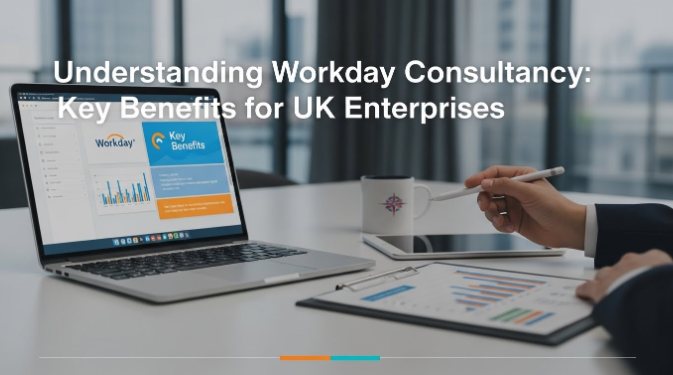

When you’re managing a growing organisation, the day-to-day challenges around HR, payroll, workforce planning, and financial reporting can pile up quickly. Many UK teams feel this pressure, especially when older systems slow down processes or create data gaps. That’s where understanding what Workday consultancy actually is becomes important. In simple terms, it involves experts who help companies implement, refine, and manage their Workday environment so it works smoothly for the entire business.
In the early stages of adoption, most teams look for guidance on configuration, data migration, and process mapping. This is usually when they come across partners such as those offering workday consultancy introduced naturally as a trusted route to specialist support. This kind of expertise is particularly valuable for enterprises that want quicker rollouts, solid integrations, and fewer operational bottlenecks.
What Workday Consultancy Means for UK Companies
Workday consultancy centres on helping organisations adopt and maintain Workday’s cloud-based HR and finance ecosystem. The role of a consultant is to understand your internal processes, align them with Workday modules, and ensure the system delivers reliable and long-term value.
Workday blends human resources, payroll, finance, talent management, and planning tools into one environment. A consultant steps in to configure these modules correctly so the system reflects how your business works. Without this guidance, settings can become misaligned, data flows may break, and teams often struggle with manual workarounds.
UK enterprises rely heavily on compliant payroll, accurate employee data, and streamlined financial operations. A consultant bridges this gap by guiding teams through setup, training, optimisation, and future adjustments as the organisation evolves.
Why UK Enterprises See Strong Results with Proper Workday Guidance
Workday is powerful, but most organisations do not use it to its full potential unless they have structured support. Let’s look at the main reasons companies gain measurable improvements when consultants are involved.
Better Configuration from Day One
Getting Workday configured correctly is often more challenging than expected. UK companies have unique payroll structures, pension rules, statutory requirements, and governance frameworks. That means a standard setup isn’t enough. Consultants help ensure accurate settings in areas such as:
- HMRC-aligned payroll calculations
- Pension auto-enrolment
- Time tracking tied to UK working practices
- Absence management based on local policies
- GDPR-compliant data handling
When configuration aligns closely with business operations, teams spend less time troubleshooting and more time using the system.
Smooth Transitions and Reliable Data Migration
Many organisations delay system updates because they fear data errors or inconsistency. Workday consultants specialise in mapping historical records, cleaning datasets, and validating information before migration. This avoids issues such as:
- Duplicate employee records
- Missing payroll history
- Corrupted job structures
- Broken reporting lines
A single error during migration can create months of complications. Consultants minimise these risks by ensuring every dataset lands in the right format.
Practical Improvements for HR and Finance Teams
Workday is often adopted with the goal of making people-related and financial processes more efficient. Consultants help organisations refine tasks like onboarding, performance reviews, and dynamic reporting, making everyday operations smoother.
For HR teams, the benefits often include:
- Faster onboarding flows
- Role-based access control
- Clearer talent tracking
- Cohesive employee profiles
For finance teams, improvements appear through:
- Accurate real-time reporting
- Automated approval chains
- Clean budget structures
- Structured spend analysis
These enhancements remove repeated manual entry and reduce errors.
Better Decision-Making Through Accurate Reporting
Reporting is one of Workday’s strongest areas, but many companies struggle to set up dashboards that reflect what leadership actually needs. A consultant helps create dashboards for areas such as headcount, turnover, salary forecasting, and cost analysis.
By tuning security roles, data sources, and business objects, they help build reports that:
- Pull live information
- Combine multiple data streams
- Reduce manual spreadsheet work
- Support strategic planning
When reporting becomes automated and reliable, leadership can make decisions based on current and clean data instead of outdated spreadsheets.
How Workday Consultants Support Long-Term Success
After Workday is launched, many businesses think the hard work is over—but most challenges start after go-live. Workday updates twice a year, teams change, and business processes evolve. Consultants guide companies through all phases so the system keeps pace.
Keeping Workday Updated and Stable
Workday’s biannual updates introduce new features, changes in workflows, and sometimes required adjustments. Consultants help organisations:
- Review release notes
- Test updates in sandbox environments
- Adjust configurations
- Train teams on new functionalities
This avoids system interruptions and ensures the organisation always benefits from new features.
Integrations with Everyday Tools
Integration work is often underestimated. Whether you’re connecting Workday to Microsoft Dynamics, Salesforce, payroll vendors, or internal APIs, consultants help design stable connections.
They ensure:
- No duplicated data
- Payloads move in the correct formats
- API calls remain reliable
- Error messages are handled immediately
In a large enterprise, integrations underpin nearly every process. One broken connection can impact payroll or reporting, so expert oversight is essential.
Support for Organisational Change
Workday must adapt as organisations restructure, merge, or grow. Consultants help teams track these changes and update the system accordingly.
They can realign:
- Job families and job profiles
- Management structures
- Cost centre hierarchies
- Location-based rules
- Compensation frameworks
This prevents issues where Workday reflects an outdated organisational picture.
Key Benefits UK Enterprises Gain from Workday Consultancy
Organisations across the UK consistently highlight certain benefits when consultants support their process. These gains are seen across HR, finance, IT, compliance, and leadership.
Higher Productivity Across Departments
When tasks like onboarding, payroll, and reporting run smoothly, teams waste less time resolving errors. A well-configured system often helps businesses reclaim dozens of hours each month.
Stronger Data Governance and Compliance
With data privacy becoming a top priority, companies value expert help with GDPR alignment, secure permissions, audit tracking, and retention rules.
These improvements reduce operational risk and support cleaner internal governance.
Better Employee Experience
A well-structured Workday setup improves:
- Self-service navigation
- Leave requests
- Payslip access
- Performance processes
When employees can complete tasks quickly, satisfaction rates naturally rise.
Reduced IT Burden
Without consultancy support, many internal IT teams struggle with:
- Monitoring integrations
- Understanding Workday’s data model
- Managing internal tickets
- Adjusting configuration
Consultants help shoulder the workload, reducing internal pressure and technical bottlenecks.
Comparing Internal Teams Versus Specialist Consultants
Some businesses consider building a fully internal Workday team. This is a long-term goal for many organisations, but in the early stages, consultants offer advantages.
Comparison Table
| Area | Internal Team | Specialist Consultant |
| Speed of Implementation | Moderate | Faster due to prior experience |
| Cost Efficiency | Higher upfront training cost | Predictable project-based cost |
| Experience Level | Limited in early stages | Deep experience across industries |
| Error Reduction | Varies | Much lower due to structured methods |
| Ability to Scale | Slow without training | Immediate support available |
This table helps illustrate how a consultant accelerates the system’s maturity while reducing risk.
Real Examples of How Consultants Improve System Use
Scenario 1: Payroll Errors for a UK Retail Company
A retail brand with thousands of employees struggled with inconsistent overtime calculations. After consultant review, configuration errors were identified in work schedules and time tracking rules. Once corrected, payroll accuracy improved and complaints dropped sharply.
Scenario 2: Finance Reporting for a Manufacturing Group
The finance team relied heavily on spreadsheets because Workday reports weren’t set up properly. Consultants created new dashboards consolidating headcount, labour costs, and budgeting details. Leadership moved from monthly manual reports to real-time dashboards.
Scenario 3: Rapid Growth in a Tech Firm
As the company expanded across Europe, new job structures, grades, and compensation models were needed. Consultants reworked the entire organisation tree and created scalable compensation rules that matched new hiring plans.
Why Growing UK Organisations Are Increasingly Choosing Workday Support
Across sectors—finance, retail, technology, education, and healthcare—organisations want systems that support hybrid work, accurate people data, payroll trustworthiness, and financial clarity. Workday provides these capabilities, but configuration and continuous improvement require specialist support.
As economic pressures rise, UK enterprises look for efficiency gains and stronger reporting. Consultancy partners help make Workday a strategic tool rather than just a system for admin tasks.
How Workday Consultancy Supports Long-Term Business Strategy
Beyond day-to-day improvements, consultants help organisations think ahead. Workday has planning, analytics, and workforce forecasting tools that can guide big decisions.
Consultants help teams:
- Forecast hiring needs
- Develop skills-based models
- Track budget burn accurately
- Build succession plans
When used well, Workday acts as more than an HR platform—it becomes a strategic resource.
Final Thoughts
Workday is a powerful system, but the value it delivers depends heavily on how well it is configured, maintained, and aligned with the organisation’s goals. For UK enterprises, consultancy support brings clarity, fewer errors, smoother adoption, and long-term stability. It helps teams stay focused on what matters while ensuring the system runs efficiently in the background.
With the right support, Workday becomes a reliable engine for operations, planning, and workforce management—giving companies a stronger foundation in a fast-changing business environment.