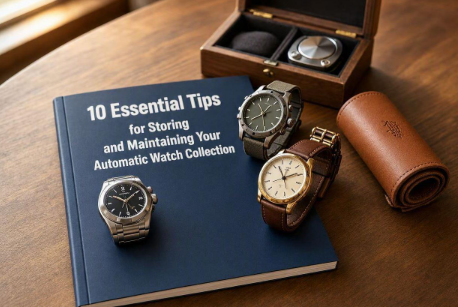

Owning an automatic watch means owning a small piece of mechanical engineering that never truly rests. Every gear, spring, and jewel inside that case works together to keep time with almost no input from you. But that same complexity is exactly why storage and maintenance matter so much. A watch left in the wrong drawer, exposed to the wrong humidity, or wound the wrong way can lose accuracy fast — or worse, suffer real mechanical damage.
If you own one automatic watch or a growing collection, these ten tips will help you protect your investment, keep every piece running smoothly, and avoid the common mistakes that shorten a watch’s life.
1. Understand Why Automatic Watches Need Special Care
Automatic watches run on kinetic energy. A rotor inside the case spins as your wrist moves, and that motion winds the mainspring. No wrist movement means no winding, which means the watch eventually stops.
This is different from a quartz watch, which just needs a battery, or even a manual watch, which you wind by hand whenever you like. An automatic watch depends on consistent motion, and that dependency shapes almost every decision you make about storing and caring for it.
2. Keep Your Watches Running With a Quality Winder
If you rotate through several automatic watches, or you don’t wear the same one daily, a watch winder solves the biggest problem collectors face: watches stopping and needing to be reset every time you pick them up.
A good winder mimics the natural motion of your wrist, keeping the mainspring wound so the watch is ready the moment you want to wear it. This matters even more for watches with complications like a perpetual calendar, since resetting the date and moon phase after a stoppage can take real time and patience.
Different watch brands also call for different winding specifications — rotation direction, turns per day, and rest periods all vary by movement. Breitling movements in particular have their own recommended settings, and using the wrong ones can either underwind the watch or put unnecessary strain on the mainspring over time. A guide to watch winders for Breitling breaks down which settings suit which calibers, so you’re not guessing.
3. Store Watches Away From Heat, Light, and Humidity
Temperature swings and direct sunlight are two of the fastest ways to damage a watch you’re not even wearing. Heat can affect the lubricants inside the movement, causing them to thin out or dry up faster than they should. UV light fades dials, especially on vintage pieces, and can degrade certain strap materials over time.
Humidity is the other silent threat. Moisture that gets past the case seals can lead to condensation on the dial or, worse, corrosion on internal components. Aim to store your watches somewhere with stable temperature and low humidity, away from windows, radiators, and bathrooms.
4. Clean and Maintain Your Watch Box Regularly
Your watch box isn’t just a display case. It’s the environment your watches live in when you’re not wearing them, so it deserves the same attention as the watches themselves.
Dust builds up faster than most people expect, especially in boxes with fabric or velvet lining, and that dust can transfer onto watch cases and crystals. Cushions and pillows compress over time and can develop odors or trap moisture if they’re not aired out occasionally. A proper cleaning routine also gives you a chance to check the box’s hinges, locks, and seals for wear before they fail and put your watches at risk.
Aevitas’s How to Keep Your Watch Box Sparkling guide walks through the right materials and methods to use, so you clean the box without damaging the lining or the watches inside it.
5. Don’t Overwind (Even Though Modern Movements Are Protected)
Most modern automatic movements include a slipping clutch mechanism that prevents damage from overwinding. Even so, it’s good practice to avoid excessive manual winding before letting the rotor take over. If you’re hand-winding a watch to get it started after it’s stopped, 20 to 30 turns is usually enough to get the mainspring engaged before natural wrist motion keeps it going.
6. Set a Regular Wearing or Winding Rotation
Watches are mechanical objects, and mechanical objects benefit from regular use. Lubricants inside the movement stay evenly distributed when the watch runs consistently, which reduces wear on the gear train over the long term.
If you have a collection large enough that some watches sit unworn for weeks, build a simple rotation. Wear each piece for at least a day every few weeks, or use a winder to keep it running between wears. This single habit does more to extend the life of a movement than almost anything else on this list.
7. Service Your Watch on the Manufacturer’s Schedule
Most manufacturers recommend a full service every three to five years, depending on the movement and how often the watch is worn. During a service, a watchmaker cleans, lubricates, and adjusts the movement, replaces worn parts, and checks water resistance seals.
Skipping services doesn’t just risk accuracy problems. It can lead to dried-out lubricants grinding against metal components, which causes wear that’s far more expensive to fix than a routine service would have been.
8. Protect the Crystal and Case From Scratches
Scratches are usually cosmetic rather than functional, but they still lower a watch’s resale value and, in some cases, its water resistance if the scratch is deep enough to compromise a seal. Store watches individually in a lined box or soft pouch rather than stacking them or letting cases touch. If you wear a watch during activities like DIY projects, gardening, or sports, consider switching to a more casual piece instead.
9. Check Water Resistance Before Swimming or Showering
Water resistance ratings aren’t permanent. Gaskets and seals degrade over time, and a watch rated 100 meters water resistant when it was new might not hold up the same way five years later without maintenance. Have water resistance tested annually if you regularly wear your watch near water, and always have it checked after any service that involves opening the case.
10. Invest in the Right Storage for Your Collection Size
A single watch can live comfortably in a simple box or pouch. A growing collection needs more thought. Consider how many pieces you currently own, how many you’re likely to add, and whether you need active winding storage for automatics you don’t wear often. Aevitas offers a full range of watch boxes, winders, and accessories designed for collectors at every stage, from a first automatic watch to an extensive rotation of pieces. You can browse the complete range on the Aevitas website.
For collectors who want a deeper technical understanding of movement care, the British Horological Institute publishes reliable, independent guidance on watch maintenance and servicing standards.
Final Thoughts
Caring for an automatic watch isn’t complicated, but it does require consistency. Store your pieces away from heat and humidity, keep them running with the right winder settings, clean the box they live in, and stick to a service schedule. Do these things and your watches will keep accurate time and hold their value for decades, not just years.
FAQs
How often should I wind my automatic watch? If you wear it daily, your wrist motion keeps it wound automatically. If you don’t wear it for more than a day or two, either hand-wind it briefly before putting it on or store it in a watch winder set to the correct rotation for its movement.
Can I leave my automatic watch in a winder all the time? Yes, most collectors do this safely. Just make sure the winder’s turns-per-day and rotation direction match the manufacturer’s specifications for that particular movement.
What happens if my automatic watch stops running? Nothing harmful happens immediately. Simply reset the time and date, give it 20 to 30 manual winds to engage the mainspring, then wear it or place it in a winder to keep it going.
How do I know if my watch box needs cleaning? Visible dust on the lining, a musty smell, or dust transferring onto your watches when you remove them are all signs it’s time to clean the box.
Is it bad to store watches in direct sunlight? Yes. Prolonged sun exposure fades dials, can degrade strap materials, and contributes to temperature swings that affect the movement’s internal lubricants.